The Milky Way’s Ancient Diet Revealed by Fossil Star Clusters

Think of a fossil.
Chances are, you are picturing dinosaur bones imprisoned in rock. But what if a fossil could look like a dazzling swarm of a million stars? Meet the globular cluster (GC) — one of the oldest structures in our Galaxy, and, as it turns out, an astronomical fossil.
Conventional fossils tell us about the evolution and migration of species over millions of years. Fossilized bones can even reveal what a dinosaur ate. GCs serve a similar purpose for the Milky Way: they reveal what our Galaxy itself has “eaten” over billions of years!
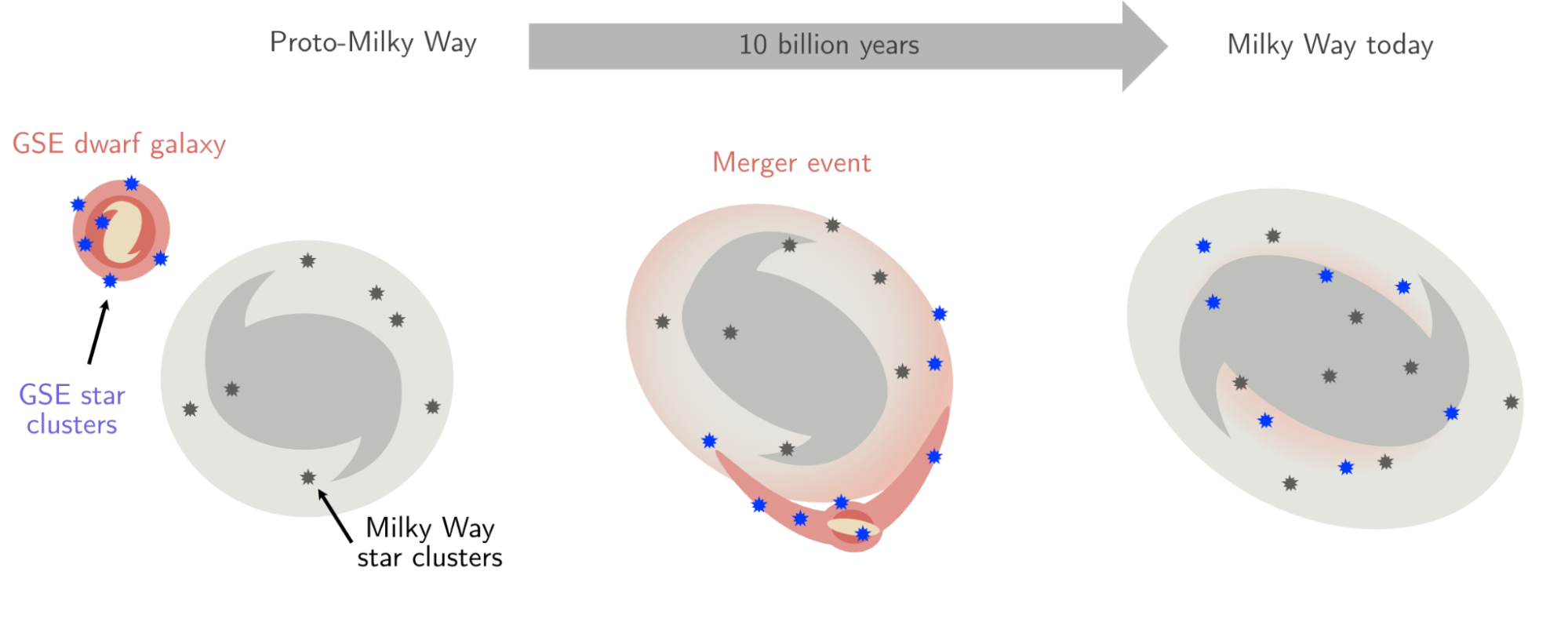
We believe the Milky Way gained a lot of its mass from eating smaller galaxies whole (a process called galactic cannibalism). As these galaxies are swallowed by the Milky Way, their star clusters also tag along with them.
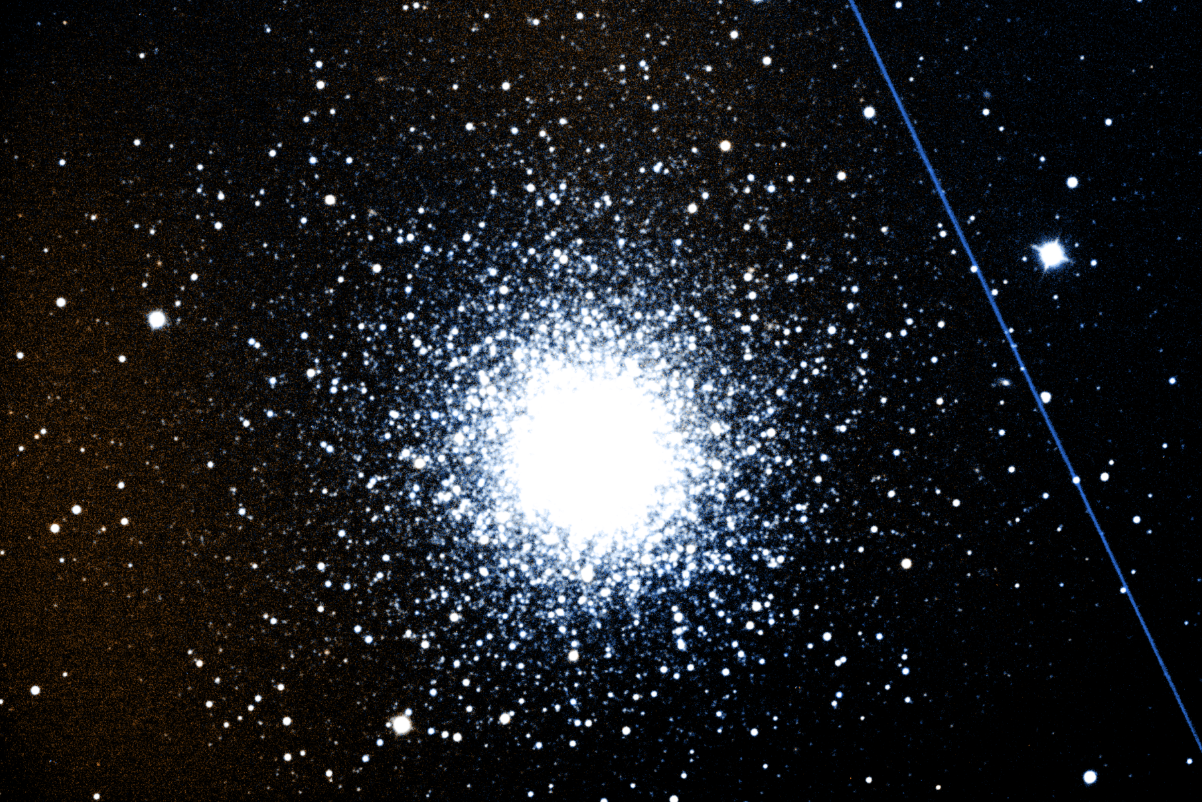
The GC shown below, Messier 3, is thought to be one of these fossilized meals, possibly having formed in another galaxy beyond the Milky Way! My research asks — how many of these massive star clusters were leftovers from the Milky Way’s ancient meals?
Globular clusters as tracers of galaxy growth
All of the globular clusters in the Milky Way are ancient — almost as old as the age of the Universe (some more than 10 billion years old, like Messier 3). But not all of them have the same origins. Some clusters are locally sourced, having formed within the Milky Way, known as in-situ clusters. Others may have formed in consumed galaxies and been absorbed into our Galaxy, known as ex-situ clusters. Figuring out which clusters were homegrown and which are fossil remnants can tell us exactly what the Milky Way has “eaten” over billions of years, and how it grew to the galaxy we live in today.
An especially interesting meal turned out to be a sausage — quite literally an ancient galaxy named Gaia-Sausage-Enceladus (or GSE for short). This galaxy was discovered in 2018 using the Gaia satellite, which tracked positions and velocities of millions of stars in the Milky Way and found a group of stars moving in a distinct pattern consistent with a merger. This pattern appeared as a sausage-like feature in the data, giving the galaxy its unique name. Soon after, researchers around the world began asking whether any of the Milky Way’s globular clusters could have come from the GSE.
Is this star cluster locally sourced?
Figuring out the origin of a star cluster is no easy task, and astronomers don’t fully agree on the exact origins of several Milky Way GCs. The usual method looks at two clues: how a cluster moves, and what it's made of. A cluster moving with the Milky Way’s disk and with similar chemistry to stars around it is likely to have been locally grown. On the other hand, a cluster moving in the opposite direction with “strange” chemical composition compared to its surroundings is more likely to be ex-situ.
But at the end of the day, there is no perfect line that separates in-situ and ex-situ clusters. To complicate things further, a 2023 study found that an ex-situ cluster’s motion can change too quickly, effectively erasing clues that a star cluster could have been a remnant of a dwarf galaxy.
My work tackles a related, more manageable question: can we predict how many “adopted” star clusters the Milky Way has?
Simulating the search for accreted clusters
To answer this question, I use computer simulations of galaxies like the Milky Way. Using these simulations, I build a model that populates these simulated galaxies with their globular cluster systems. When these smaller galaxies become consumed by the Milky Way, I simulate how their GCs are “digested” by the Milky Way’s gravitational field. The Galaxy’s tidal forces strip away their stars and cause them to lose mass. Some clusters may end up losing a significant amount of mass, and others are destroyed completely — a process our model also tries to predict.
Our approach asks a simple question: given how present-day galaxies and GC systems relate to each other, what would those galaxies and GCs have looked like billions of years ago? Our work is still in progress, but so far we have a surprising result: even small tweaks to the model parameters can produce Milky Way-like galaxies with totally different star cluster populations. Some end up with hundreds of surviving clusters, but other simulations have no clusters that end up surviving!
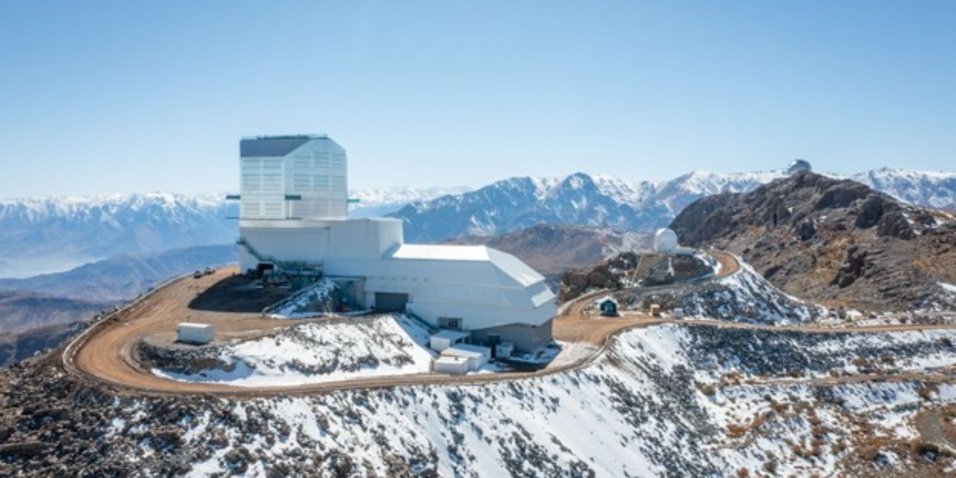
Beyond just satisfying our curiosity about how the Milky Way grew, this research gives other astronomers a concrete prediction to compare against real observations. Soon, the next generation of observatories and instruments (e.g., the Rubin Observatory, the Via spectrograph, the Roman Space Telescope, in addition to Gaia) will capture wider and deeper images of the sky. These data will let us test our predictions: how many ex-situ star clusters are out there, where are they, and how do they evolve over time?
The future: Star clusters, streams, and dark matter
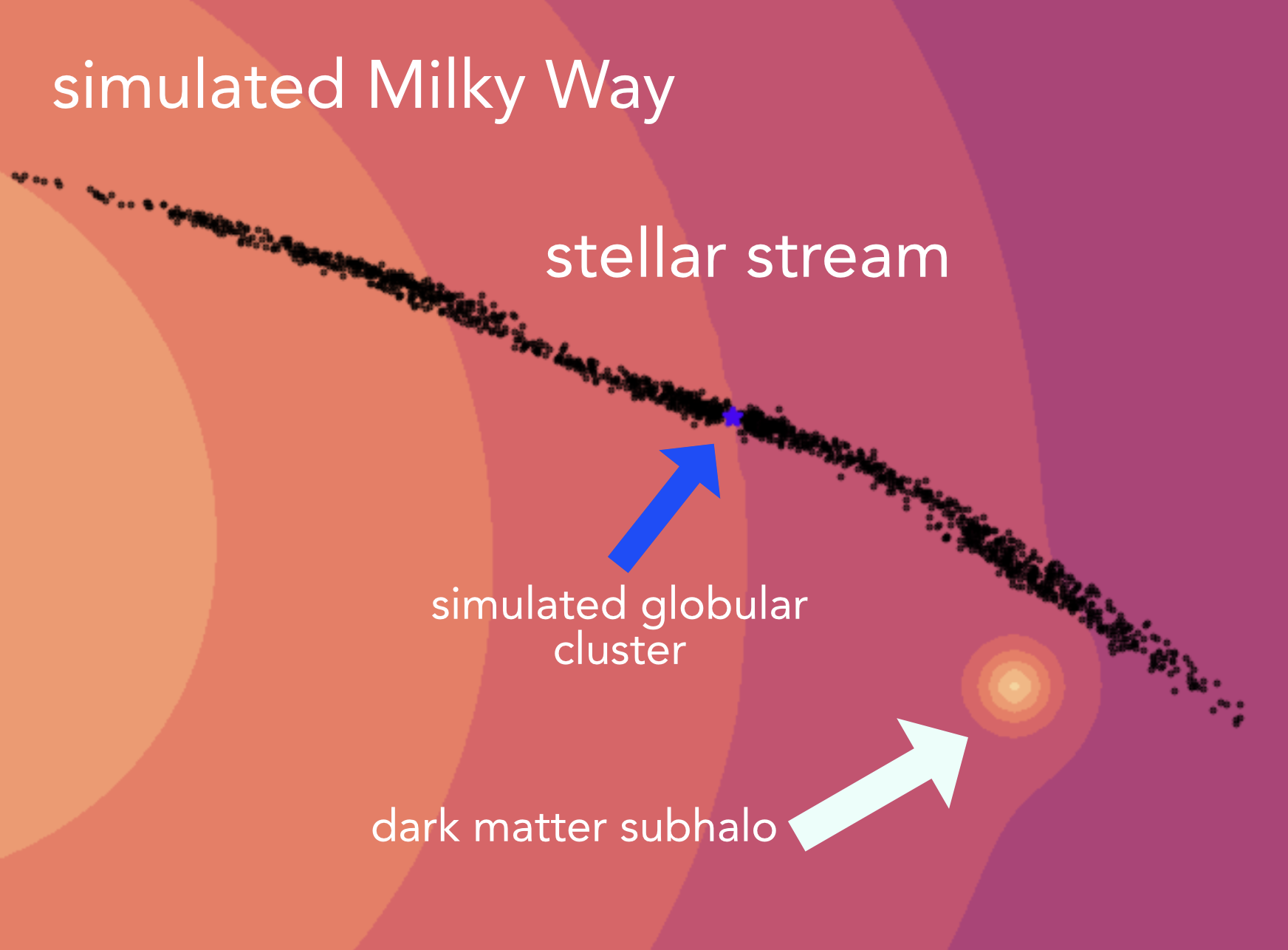
Observing Milky Way star clusters with unprecedented detail will also sharpen our dissolution model: stellar tidal tails (a trail of stars left behind as GCs are digested) will be detected around fainter and more distant clusters than ever before, giving us information about exactly how they dissolve. Looking ahead, this model will be extended to simulate these streams directly, forecasting how many streams we should expect to find around Milky Way-like galaxies. We can then test our predictions against real data: do our assumptions about the dark matter halo’s shape hold up? Can we find clues of small dark matter clumps that can disturb these streams? Together, these tests would help us understand the fundamental nature of dark matter.
Related Research Areas

Cosmic Ecosystems
Cosmologists at KIPAC study the structure of the Universe from nearby galaxies and their satellites to the distribution of galaxies on the largest scales across the Universe.
Physics of the Universe
At KIPAC, we are working to understand the physics that shapes the origins, evolution and fate of the Universe.Related People

Philip Mansfield
Physical Science Research Scientist
Christian Aganze
Postdoctoral Scholar