
Cosmic Ecosystems

How do stars and galaxies form, and how do gas, dust, magnetic fields, and feedback in the interstellar medium regulate that process? How do galaxies grow and change over cosmic time as they accrete gas, form stars, and interact and merge with their neighbors? How do environments—from small groups to massive galaxy clusters—transform galaxies and reveal the physics of hot plasma and the cycling of baryons on the largest bound scales? And how do galaxies connect to their dark matter halos and the cosmic web, linking the visible Universe to the underlying structure in which it forms?
At KIPAC, we study cosmic ecosystems across an extraordinary range of scales—from the gas, dust, and stars within galaxies, to satellite systems and their hosts, to the largest galaxy clusters. We combine observations, simulations, and theory to connect galaxies to their dark matter halos and environments, and to understand how baryons, feedback, magnetic fields, and element enrichment drive galaxy evolution.
Galaxy Formation
Research at KIPAC integrates theory, simulations, and observations to reveal how galaxies form and evolve across cosmic time—from the first stars and galaxies in the early Universe to the rich diversity of galaxies we observe today—and how this evolution connects to the growth of structure in the cosmic web. A key theme is the cycling of baryons—how gas flows into, through, and out of galaxies, enriching the circumgalactic medium with heavy elements. Within the scaffolding of dark matter halos, we study how baryons accrete and cool, form stars, and are redistributed by feedback from supermassive black holes and supernovae. We develop and test models of the galaxy–halo connection to interpret survey data, link galaxies to their environments and assembly histories, and use galaxy populations as laboratories to probe the physics of dark matter.
Astrophysical Magnetism and the Interstellar Medium
The interstellar medium (ISM) is the gas, dust, and plasma between stars, spanning an enormous range of physical conditions—from hot, tenuous ionized gas to the cold, dense molecular clouds where stars form. At KIPAC, we study interstellar turbulence, the multiphase structure of the gas, and the magnetic fields that thread the ISM, shaping how gas collapses, fragments, and forms stars. By combining theory, simulations, and observations of the Milky Way and nearby galaxies, we work to understand the structure of galactic magnetic fields and the role of magnetism and turbulence in regulating star formation.
Galaxy Clusters
Galaxy clusters are the culmination of hierarchical growth, where matter has assembled over billions of years into the densest nodes of the cosmic web. They contain hundreds to thousands of galaxies embedded in vast halos of dark matter and filled with hot, X-ray–emitting plasma. At KIPAC, we study how clusters assemble over cosmic time and how galaxies, dark matter, and the intracluster medium interact. Clusters are powerful laboratories for baryonic phyusics: we investigate how gas is heated and enriched, how feedback from supermassive black holes shapes the intracluster medium and the matter distribution, and how these processes influence both galaxy evolution and the observable signatures of clusters.
Gravitational Lensing
Gravitational lensing occurs when mass bends the paths of light from distant galaxies, subtly distorting their apparent shapes and, in some cases, producing arcs or multiple images. At KIPAC, we use weak and strong lensing to map the distribution of dark matter in and around galaxies and clusters, measure halo masses, and connect visible galaxies to the underlying matter that shapes their environments. Lensing also provides sensitive tests of dark matter on small scales—probing substructure and the internal properties of halos—while providing an important bridge to the broader cosmological picture of how structure grows.
Related projects

Athena
Athena, the Advanced Telescope for High Energy Astrophysics, is the next flagship X-ray observatory, planned for launch by the European Space Agency (ESA) in the early 2030s with a significant contribution from NASA.
Computational Astrophysics
KIPAC researchers tackle a wide range of computational challenges as part of a mission to bridge the theoretical and experimental physics communities.
Dark Energy Spectroscopic Instrument
DESI is the heart of a ground-based survey that will spend the first half of the next decade pinpointing the locations and spectra of up to 35 million galaxies and 2.4 million quasars across one-third of the night sky.
Dark Energy Survey
The Dark Energy Survey (DES) is a large survey of distant galaxies that aims to unravel the mystery of cosmic acceleration.
Nancy Grace Roman Space Telescope
The Nancy Grace Roman Space Telescope (formerly the Wide Field Infrared Survey Telescope, or WFIRST) is a mission designed to study dark energy, the evolution of galaxies, and the populations of extrasolar planets.
NSF-DOE Vera C. Rubin Observatory's Legacy Survey of Space and Time
The Legacy Survey of Space and Time (LSST) is a 10-year survey of the southern sky that is taking place at the NSF-DOE Vera C. Rubin Observatory, located on the El Peñon peak of Cerro Pachón in northern Chile.Related Research Highlights
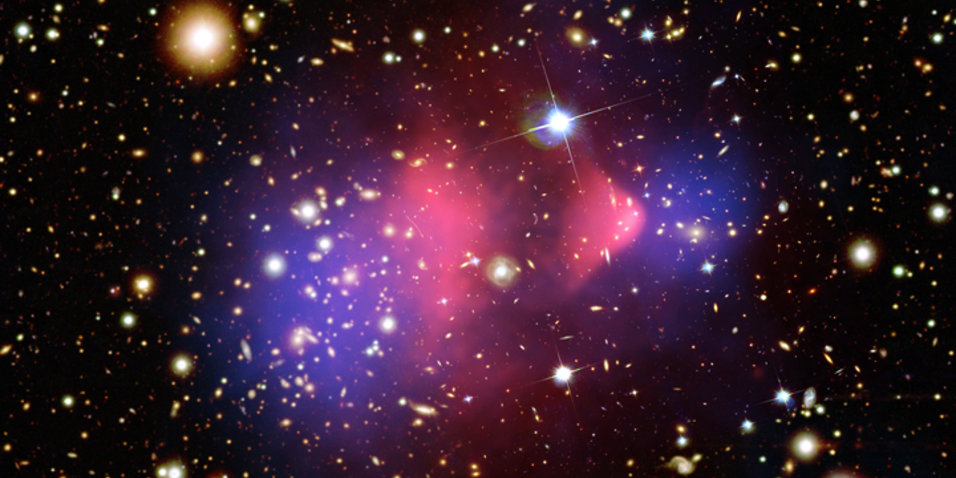
Resonating with Dark Matter with ADMX-VERA

Single-electron Sensitive Readout / SiSeRO: A novel X-ray detector technology for future astronomy missions
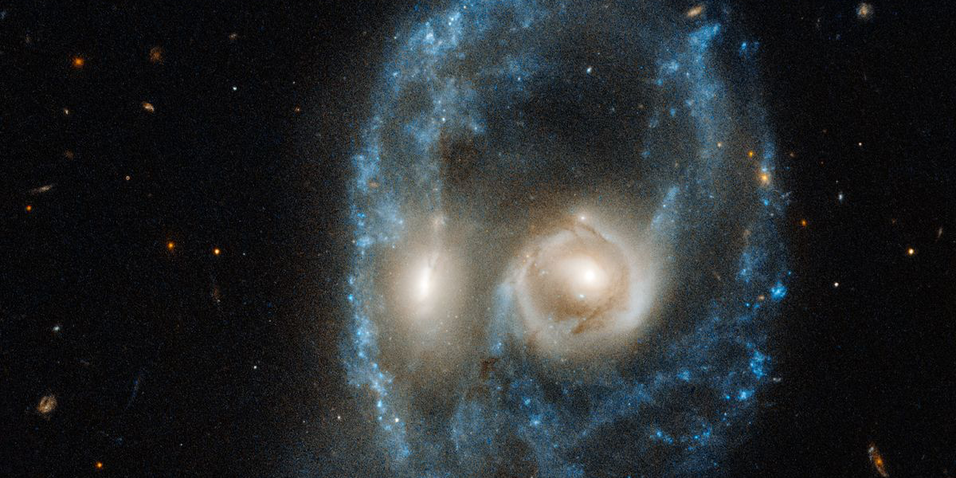
Ghosts in the Sky and Ghosts in the Machine
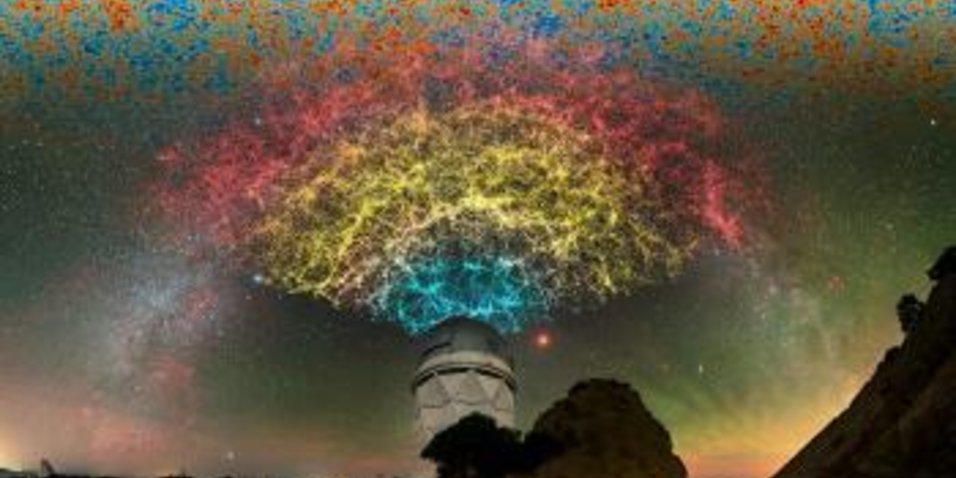
Unraveling the biggest 3D map of galaxies with DESI

Related People
-

Steven Allen
Professor of Physics and of Particle Physics and Astrophysics -

Jay Baptista
Ph.D. Student -

Chris Byrohl
Postdoctoral Scholar -

Ani Chiti
Postdoctoral Scholar -

Susan E. Clark
Assistant Professor of Physics -

John Franklin Crenshaw
Postdoctoral Scholar -

Sanskriti Das
Postdoctoral Scholar -
Ben Dodge
Ph.D. Student -

Lukas Eisert
Rubin Observatory Specialist -

Joshua Frieman
Professor of Particle Physics and Astrophysics and, by courtesy, of Physics -
Kaitlyn Karpovich
Ph.D. Student -

Adam Mantz
Physical Science Research Scientist -

Andrés A. Plazas Malagón
Rubin Operations Scientists -
Noah Sailer
Postdoctoral Scholar -

Emmanuel S Schaan
Assistant Professor of Particle Physics and Astrophysics -
Kate Storey-Fisher
Postdoctoral Scholar -
Risa Wechsler
Director, Kavli Institute for Particle Astrophysics and Cosmology (KIPAC), Humanities and Sciences Professor, Professor of Physics and of Particle Physics and Astrophysics, and Senior Fellow at Stanford HAI


