

Main content start
Risa Wechsler
Director, Kavli Institute for Particle Astrophysics and Cosmology (KIPAC), Humanities and Sciences Professor, Professor of Physics and of Particle Physics and Astrophysics, and Senior Fellow at Stanford HAI
Risa Wechsler is the Humanities and Sciences Professor and the Director of the Kavli Institute of Particle Astrophysics and Cosmology. She is also Professor of Physics (H&S) and Professor of Particle Physics & Astrophysics (SLAC), Director of the Center for Decoding the Universe, and an Associate Director and Senior Fellow of the Stanford Institute for Human Centered AI. She is a cosmologist whose work investigates some of the biggest outstanding questions about our universe — how it formed, what it is made of, how it is structured, and what its future holds.
Her research focuses on understanding the evolution of galaxies, the large-scale structure of the universe, and the nature of dark matter and dark energy. She uses large numerical simulations, theoretical models, and the largest observed maps of the universe to explore these forces that shape the cosmos. Her recent work also investigates the formation and cosmological context of the Milky Way and probes dark matter through small-scale cosmic structure, and explores how data science and AI/ML can drive new understanding. Wechsler has played key leadership roles in major international collaborations including the Dark Energy Survey, Dark Energy Spectroscopic Instrument, and Rubin Observatory's Legacy Survey of Space and time, a decade-long survey that will reveal the dynamic universe in unprecedented detail. She is recently involved in the Via Survey, which will map the Milky Way at high precision to probe dark matter physics in new ways.
Wechsler is an elected member of the National Academy of Sciences and the American Academy of Arts and Sciences and a Fellow of the American Physical Society and the American Association for the Advancement of Science.
Her research focuses on understanding the evolution of galaxies, the large-scale structure of the universe, and the nature of dark matter and dark energy. She uses large numerical simulations, theoretical models, and the largest observed maps of the universe to explore these forces that shape the cosmos. Her recent work also investigates the formation and cosmological context of the Milky Way and probes dark matter through small-scale cosmic structure, and explores how data science and AI/ML can drive new understanding. Wechsler has played key leadership roles in major international collaborations including the Dark Energy Survey, Dark Energy Spectroscopic Instrument, and Rubin Observatory's Legacy Survey of Space and time, a decade-long survey that will reveal the dynamic universe in unprecedented detail. She is recently involved in the Via Survey, which will map the Milky Way at high precision to probe dark matter physics in new ways.
Wechsler is an elected member of the National Academy of Sciences and the American Academy of Arts and Sciences and a Fellow of the American Physical Society and the American Association for the Advancement of Science.
Projects

Artificial Intelligence and Machine Learning
At KIPAC, researchers are working to advance the frontiers of astronomy through the application of AI and machine learning, and simultaneously pushing the frontiers of AI/ML methods in pursuit of astrophysics discovery.
Computational Astrophysics
KIPAC researchers tackle a wide range of computational challenges as part of a mission to bridge the theoretical and experimental physics communities.
Dark Energy Spectroscopic Instrument
DESI is the heart of a ground-based survey that will spend the first half of the next decade pinpointing the locations and spectra of up to 35 million galaxies and 2.4 million quasars across one-third of the night sky.

Dark Energy Survey
The Dark Energy Survey (DES) is a large survey of distant galaxies that aims to unravel the mystery of cosmic acceleration.

Nancy Grace Roman Space Telescope
The Nancy Grace Roman Space Telescope (formerly the Wide Field Infrared Survey Telescope, or WFIRST) is a mission designed to study dark energy, the evolution of galaxies, and the populations of extrasolar planets.

NSF-DOE Vera C. Rubin Observatory's Legacy Survey of Space and Time
The Legacy Survey of Space and Time (LSST) is a 10-year survey of the southern sky that is taking place at the NSF-DOE Vera C. Rubin Observatory, located on the El Peñon peak of Cerro Pachón in northern Chile.

Via
The Via Project is using the Milky Way galaxy as a laboratory to answer fundamental questions about the nature of the universe. Via will conduct an all-sky survey of stars using the 6.5-meter MMT (Arizona) and Magellan (Chile) telescopes.
Research Highlights

Scientists celebrate first images from world’s largest digital camera
Jun 25, 2025
SLAC National Accelerator Laboratory unveiled the first photos from the Vera C. Rubin Observatory’s Legacy Survey of Space and Time
Risa Wechsler Elected to the National Academy of Sciences
May 19, 2025
Seven Stanford researchers join the scholarly society, which works to promote science for public good.

KIPAC joins the groundbreaking Via project
Oct 1, 2024
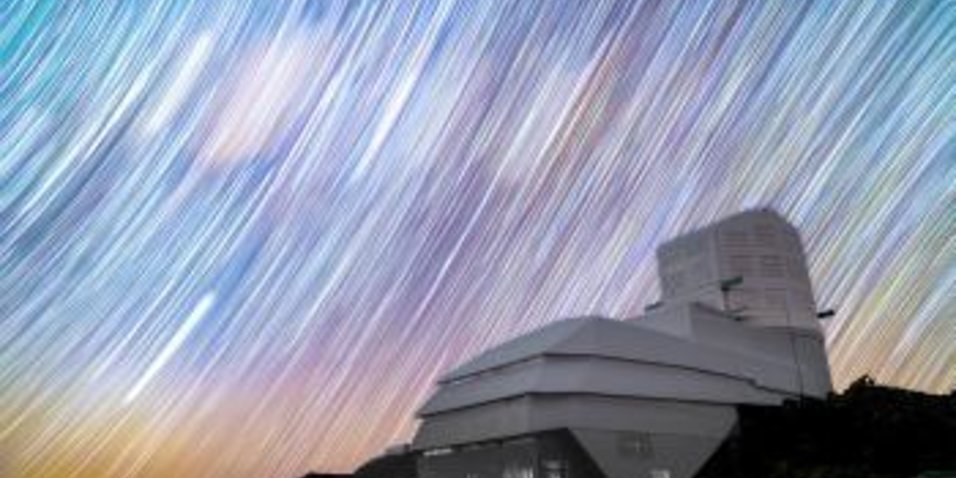
The bold bet that built a telescope
Jun 23, 2025
Two decades ago, Stanford & SLAC took a gamble on an unproven telescope design with no funding, no home, and no official backing. Now, with first images in hand, it's paying off!
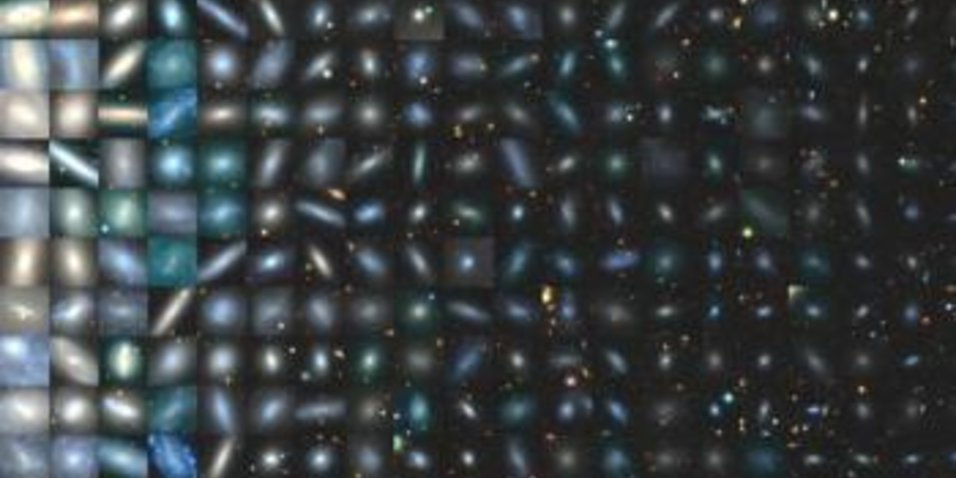
The Milky Way represents an outlier among similar galaxies, universe survey data shows
Nov 18, 2024
For decades, scientists have used the Milky Way as a model for understanding how galaxies form. A trio of new studies questions whether it is truly representative of other galaxies
Decoding the mysteries of the universe
Dec 3, 2024
A new center brings astrophysics, data science, and AI together to answer some of the universe’s biggest questions.
The universe, decoded
Sep 9, 2025
A new Stanford center is uniting astronomers and data scientists to decipher the cosmos—and reinvent the future of discovery.

Education
PhD, University of California, Santa Cruz (2001)
SB, Massachusetts Institute of Technology (1996)
Contact
Research Topics and Projects
Related News
-
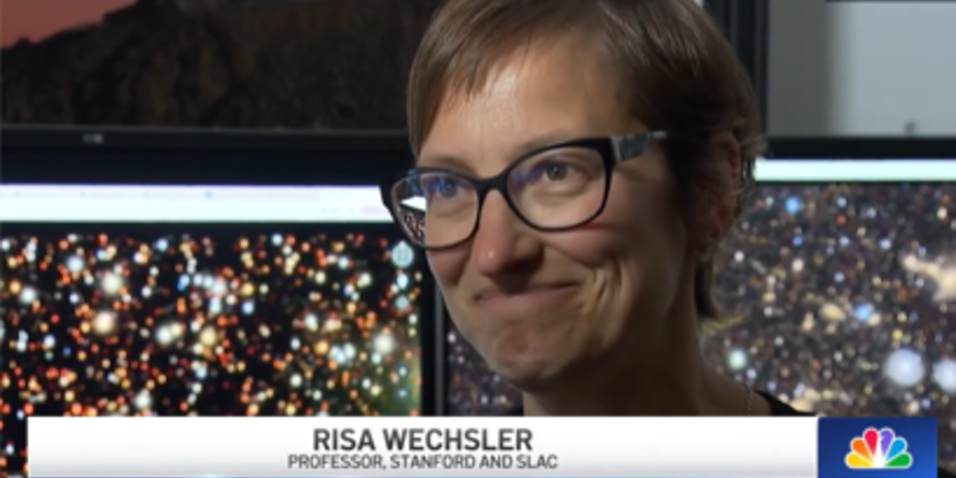
Telescope with Bay Area roots becomes part of project to scan the universe
Jul 3, 2026An ambitious project to scan the universe has ties to the Bay Area. -
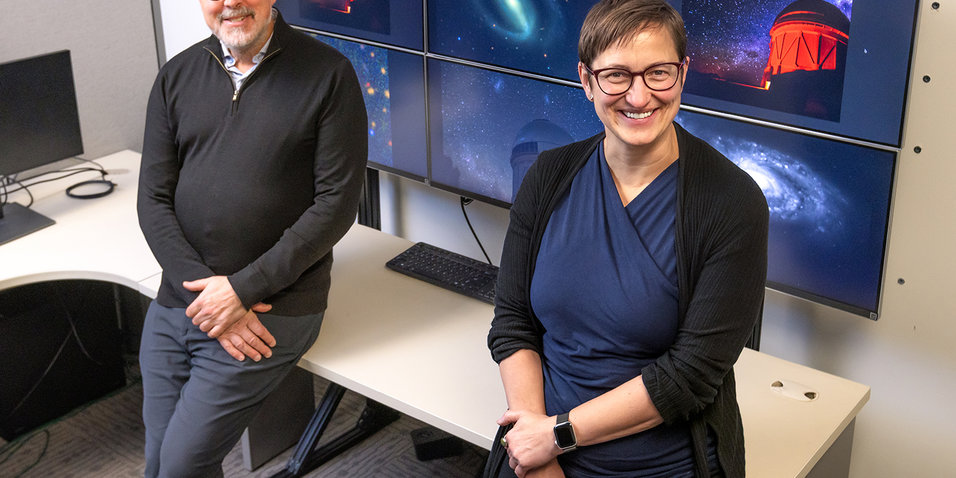
SLAC experts explore dark energy and cosmic mysteries
Jan 27, 2026Cosmologists Josh Frieman and Risa Wechsler reflect on the Dark Energy Survey, sharing how it’s paving the way for future research at the NSF-DOE Vera C. Rubin Observatory.