News
News
-
KIPAC's Aaron Roodman Featured in New York Times "100 Unanswered Questions" List
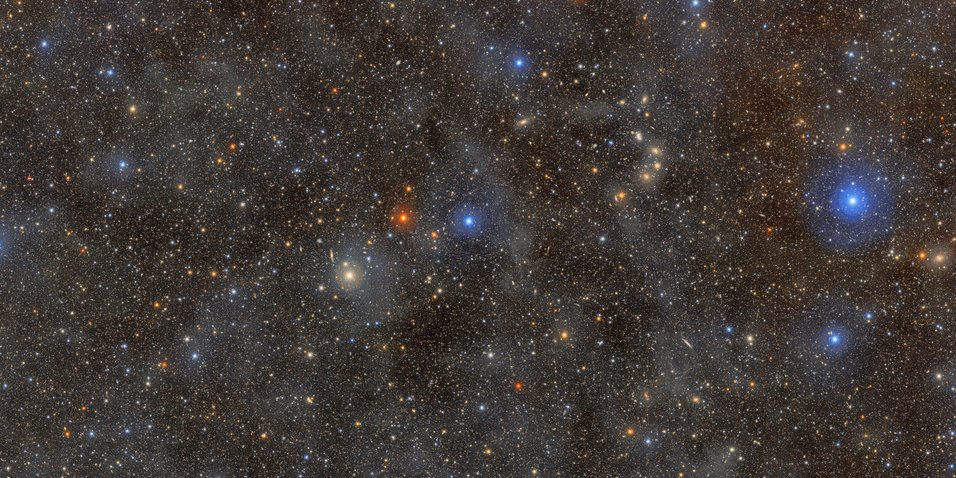
KIPAC's Aaron Roodman, who studies dark energy with the Vera C. Rubin Observatory and led the construction of its record-breaking LSST Camera, is featured at #97 in the Times' list of 100 unanswered questions in science.
-
Daniel Akerib on a Faint Hint of Dark Matter
KIPAC senior member, Prof. Dan Akerib, joins Sean Carroll's Mindscape to discuss a single, tantalizing event in the LUX-ZEPLIN dark matter experiment, and what it takes to tell a real discovery from a fluke.
-
Jesse Han Receives 2026 Trumpler Award
Jesse Han is the recipient of the 2026 Robert J. Trumpler Award from the Astronomical Society of the Pacific, the top thesis prize for astrophysics in North America.
-
World’s biggest dark matter detector spots a single weird particle
It’s far too early to declare a discovery, physicists with the LZ detector say.
-
Scientists spot a possible dark matter signal
A world-leading dark matter detector observed a rare particle interaction that may represent dark matter, the invisible substance comprising most of the universe’s mass.
-
NASA's Roman Telescope Could Unravel the Mysteries of Dark Energy and Dark Matter
Learn more about the Nancy Grace Roman Space Telescope and how it could uncover some of the mysteries surrounding dark matter and dark energy.
-
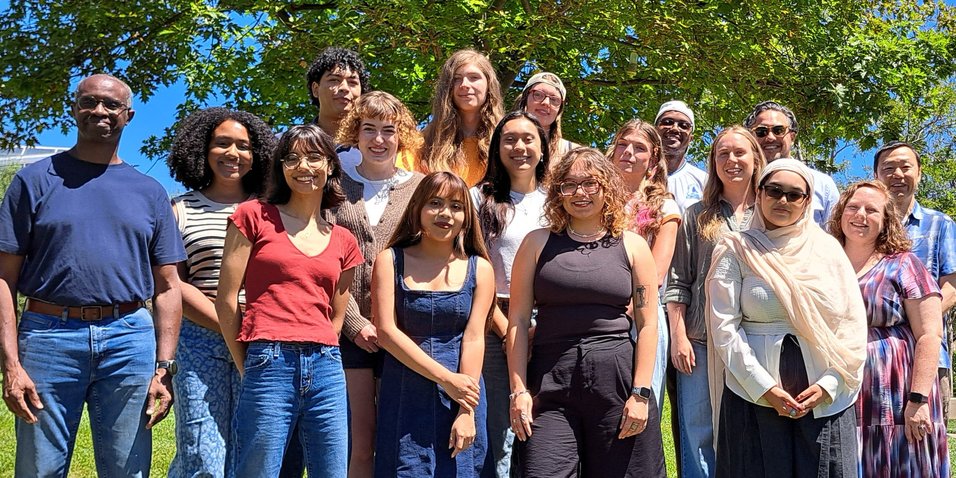
Cal-Bridge Scholars Cap a Summer of Research at KIPAC
This summer's Cal-Bridge cohort at KIPAC joined students from a CUNY summer program for professional development and community-building events throughout the internship.
-
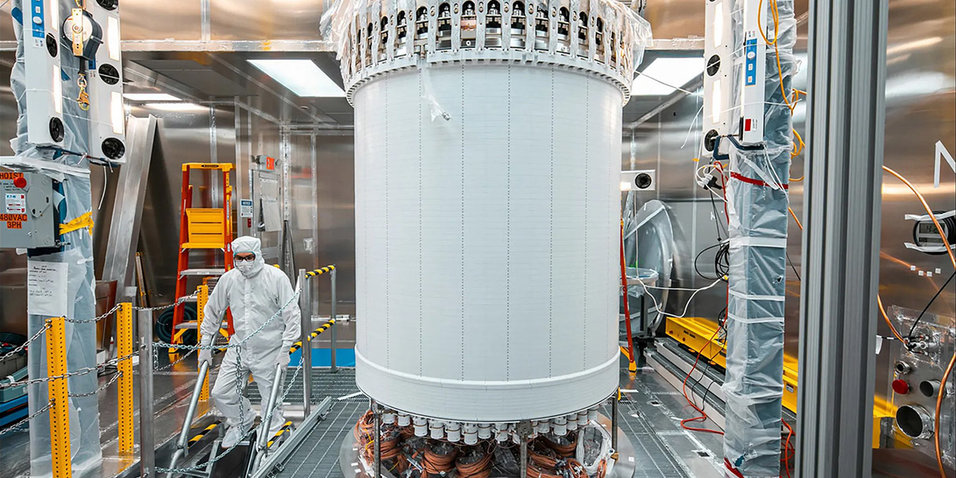
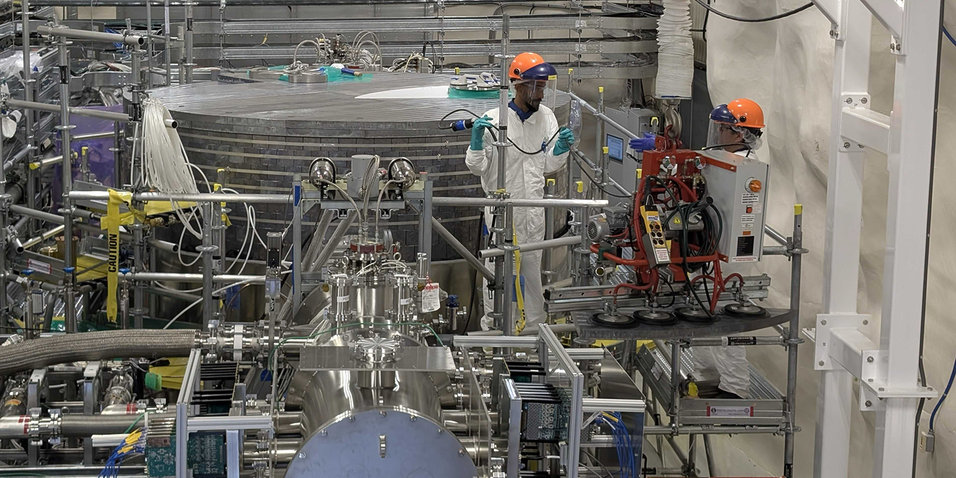
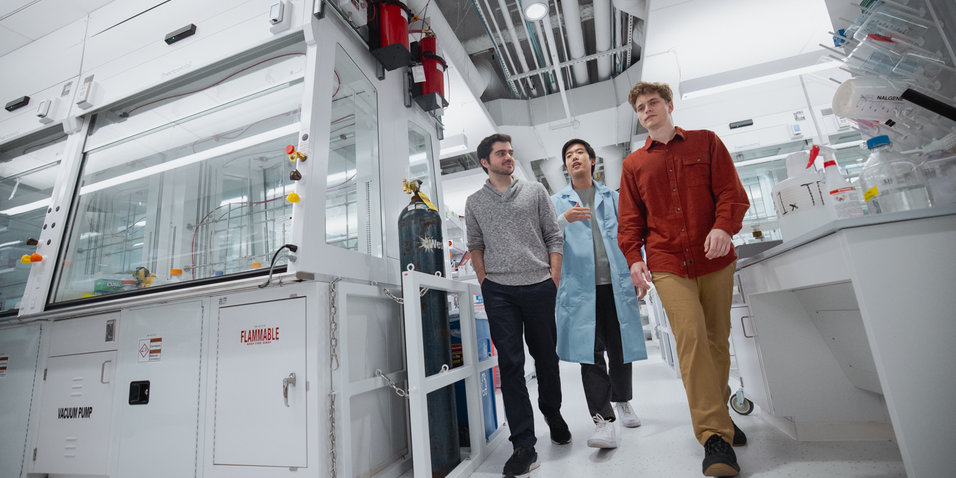
Scientists hunt for dark matter deep underground
A SLAC-led experiment more than a mile beneath a Canadian mine has begun collecting early scientific data ahead of a full-sensitivity search next year.
-
How Do You "See" a Magnetic Field You Can't Touch?
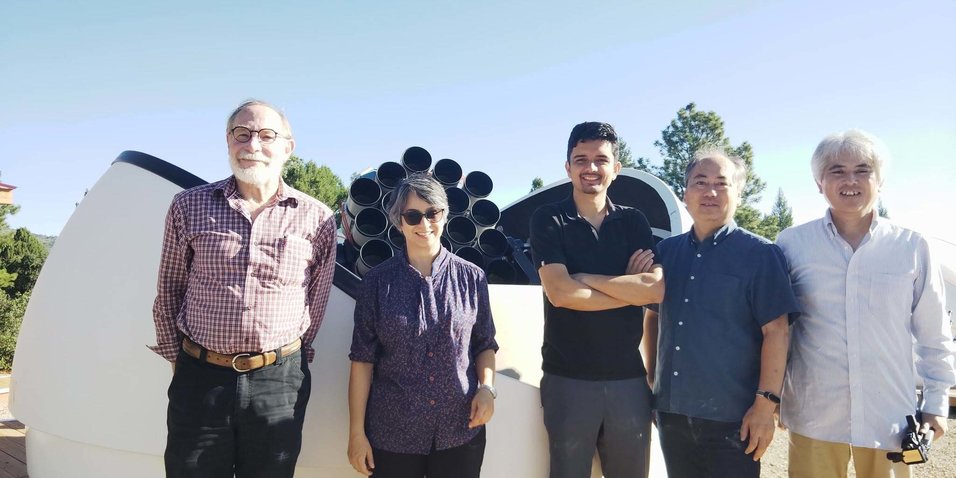
DragonflyPol turns the Dragonfly Telephoto Array — 48 stacked Canon camera lenses — into a wide-field polarization camera.
-
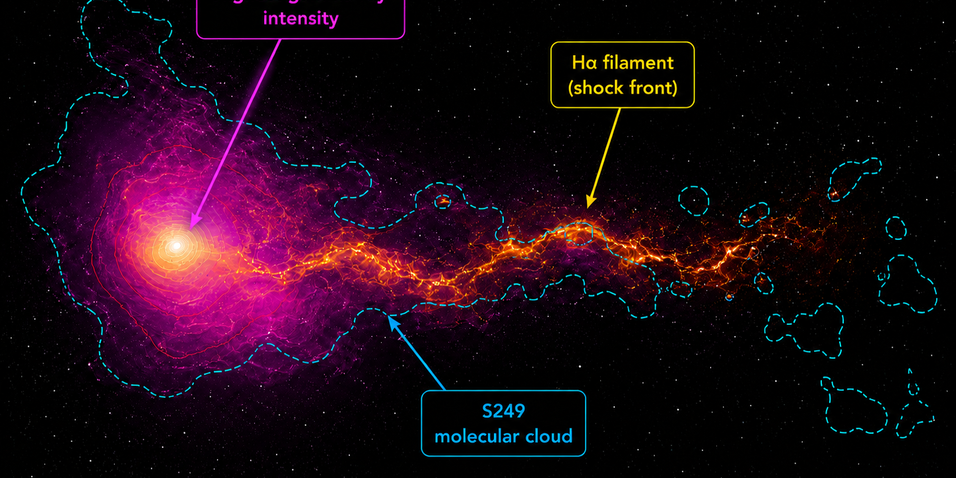
'We weren't really looking for' it: Astronomers accidentally discover 2 supernovas that exploded from a single star system in cosmic first
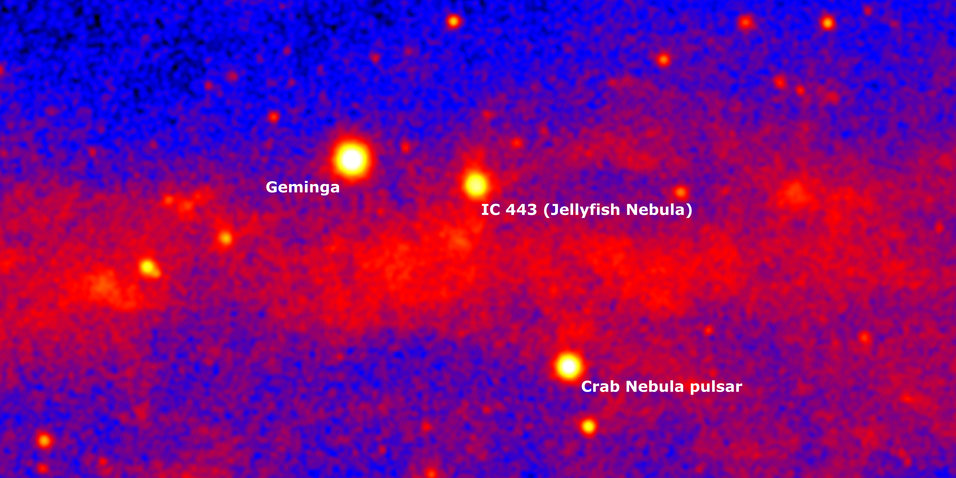
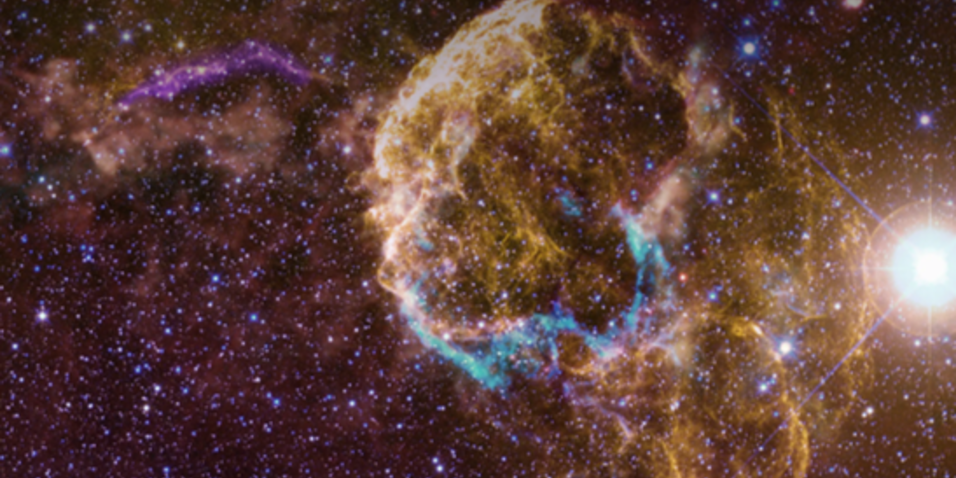
Astronomers have identified a supernova remnant beside the well-known Jellyfish Nebula (IC 443), and evidence suggests both are the wreckage of two stars that once orbited each other before exploding separately.
-
All in the family: Fermi data links supernova siblings
A study led by KIPAC members and using Fermi/LAT data has uncovered compelling evidence that two neighboring supernova remnants (SNRs), the debris left behind after stars explode, are actually the remains of massive companion stars that once orbited each other before exploding tens to hundreds of thousands of years apart. The study has been published in Nature Communications.
-
From biology to astrophysics, AI expands the boundaries of discovery
AI is helping scientists model human cells, decode the universe, and accelerate discovery across nearly every field. Here are some key innovations from across campus.
-
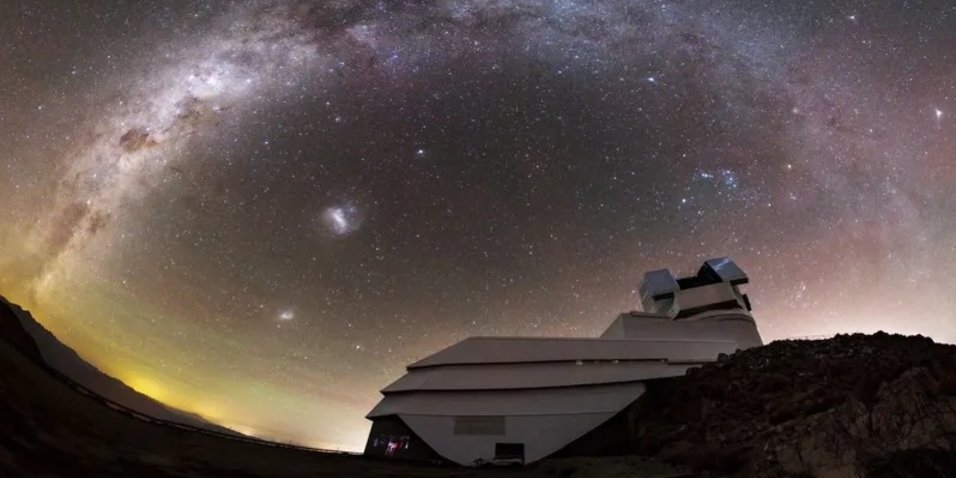
Telescope with Bay Area roots becomes part of project to scan the universe
An ambitious project to scan the universe has ties to the Bay Area.
-
NSF-DOE Vera C. Rubin Observatory begins capturing a ‘movie’ of the cosmos
Rubin’s 10-Year Legacy Survey of Space and Time will scan the night skies to create a time-lapse record of the Universe.
-
Researchers uncover evidence for sibling supernovas
Physicists have identified possible remnants of two exploded stars, or supernovas, that were once paired before they each blew up. The discovery was made in part by using data from the Fermi Large Area Telescope.
-
Vera C. Rubin Observatory days away from launching decade-long sky survey
After years of construction and months of testing, the Chilean mountaintop telescope is nearly ready to begin the most ambitious astronomical survey ever attempted.
-
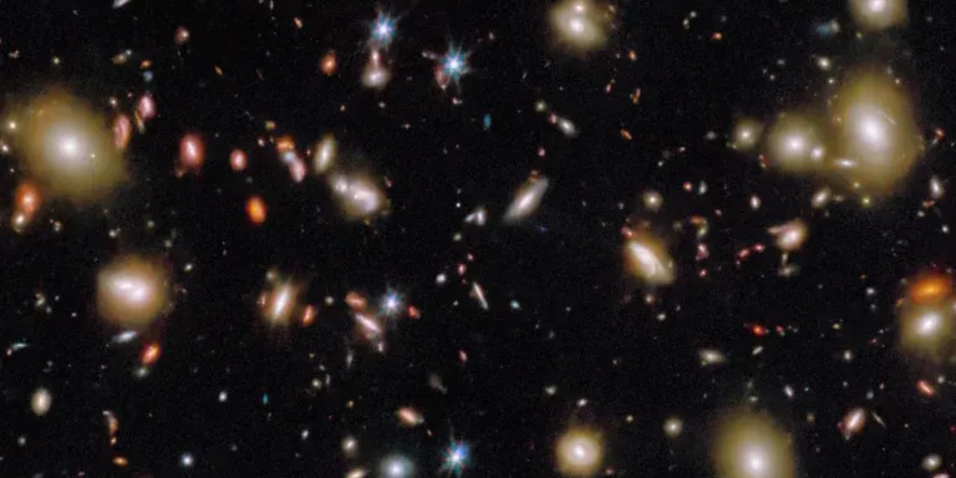
Probing the Elements Produced by the First Stars
Imagine a universe devoid of all elements apart from hydrogen, helium, and lithium. That was the state of the Universe until the formation of the first stars, around a hundred million years after the Big Bang. These stars began to forge the elements we see today through nuclear fusion and dispersed them via supernovae explosions in a process known as enrichment. Relic second-generation stars preserve the elements produced by the first stars. They allow us to study initial enrichment in detail.
-
Patricia Rose Burchat Wins the Lloyd W. Dinkelspiel Award
The Lloyd W. Dinkelspiel Award recognizes distinctive contributions to undergraduate education and the quality of student life.
-
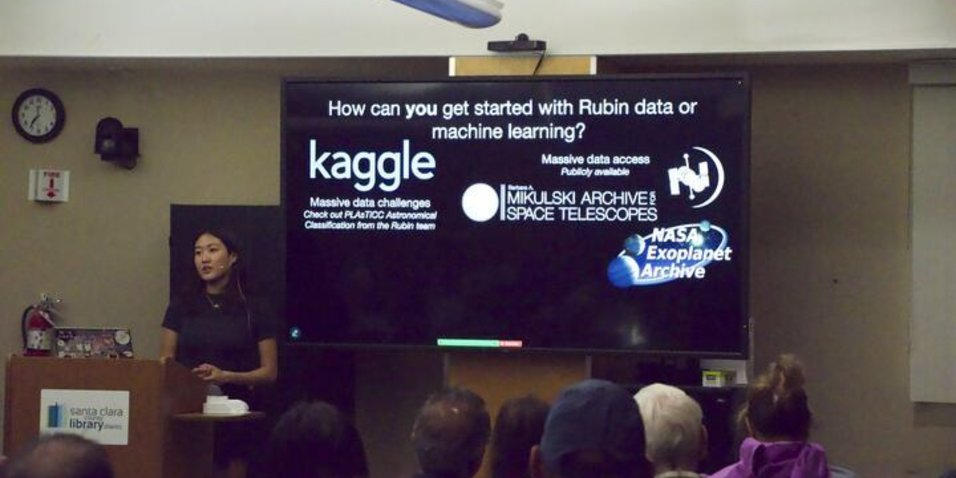
KIPAC's Rubin Observatory Public Engagement Series Continues at Peninsula Astronomical Society
The third in our 2026 lecture series drew over 90 attendees at the Peninsula Astronomical Society