News
News
-
Stanford-led team shares honor for ‘revolutionizing’ study of high-energy cosmic phenomena
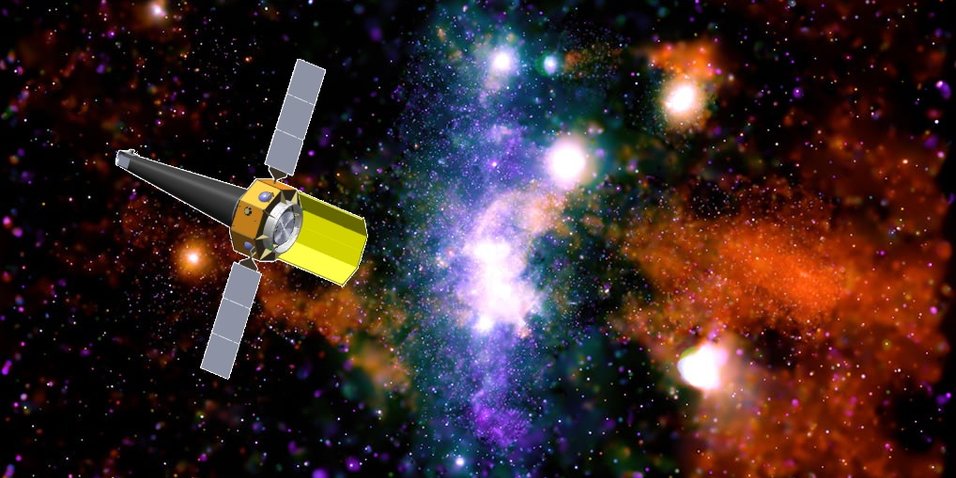
The European Physical Society awarded a top prize to the teams behind the Fermi Gamma-ray Space Telescope, studying pulsars, supermassive black holes, neutron stars, etc.
-
Scientists celebrate first images from world’s largest digital camera
SLAC National Accelerator Laboratory unveiled the first photos from the Vera C. Rubin Observatory’s Legacy Survey of Space and Time
-
The bold bet that built a telescope
Two decades ago, Stanford & SLAC took a gamble on an unproven telescope design with no funding, no home, and no official backing. Now, with first images in hand, it's paying off!
-
This Revolutionary New Telescope Will Observe the Whole Sky Every Three Days
The game-changing Vera C. Rubin Observatory will collect more astronomical data in its first year than all other telescopes combined.
-
Coming June 23, 2025: First Look at the cosmos with NSF–DOE Vera C. Rubin Observatory
Over the next ten years, Rubin Observatory will create a movie of the night sky using the largest camera ever built, scanning the sky to create a time-lapse of the Universe.
-
Ready, Set, Process: Preparing for Rubin Observatory's Data Deluge
A look inside the data processing infrastructure built by the NSF–DOE Vera C. Rubin Observatory to handle the Universe’s greatest data challenge.
-
Risa Wechsler Elected to the National Academy of Sciences
Seven Stanford researchers join the scholarly society, which works to promote science for public good.
-
Preparing for the greatest cosmic movie ever made
At the top of Cerro Pachón in northern Chile, the NSF–DOE Vera C. Rubin Observatory is nearing completion!
-
Eye to the sky…on-sky engineering tests have begun at NSF–DOE Rubin Observatory using the world’s largest digital camera!
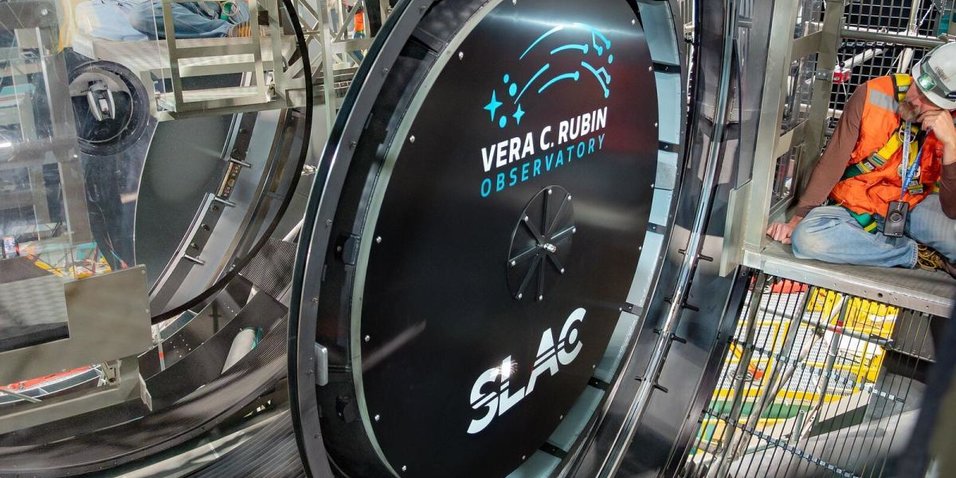
On-sky engineering tests have begun at NSF–DOE Rubin Observatory. After installing the LSST Camera, we turned the telescope to the sky, a moment 20 years in the making.
-
NSF–DOE Vera C. Rubin Observatory Installs LSST Camera on Telescope
Using the largest digital camera in the world, Rubin Observatory will soon be ready to capture more data than any other observatory in history.
-
Looking for Light from the Invisible
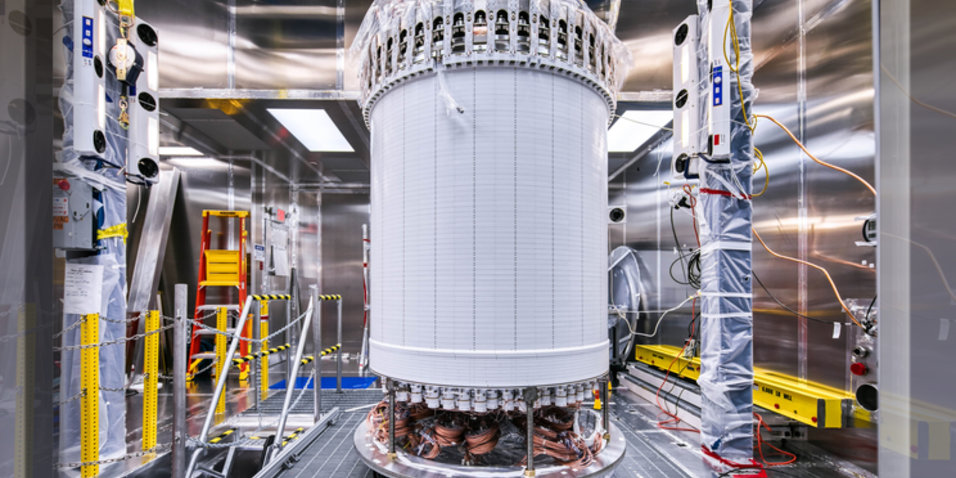
Several KIPAC members are running an experiment (LUX-ZEPLIN) almost a mile underground in South Dakota, looking for evidence of the invisible: dark matter!
-
Stanford welcomes first GPU-based supercomputer
“Marlowe,” named after the fictional detective created by Raymond Chandler, has the potential to transform research across fields, from political science to astrophysics.
-
The Vera C. Rubin Observatory is ready to transform our understanding of the cosmos
The telescope will catalogue billions of new objects and produce a new map of the entire night sky every three days with the largest digital camera ever made.
-
About 30 years ago an "ideas guy" and a team builder joined forces to search for the invisible bulk of existence.
Dark-matter experts Daniel Akerib and Thomas Shutt joined the SLAC National Accelerator Laboratory, to uncover the elusive substance.
-
Resonating with Dark Matter with ADMX-VERA
The Universe has an invisible skeleton made of particles we can’t describe in our current theories, known only as dark matter.