
Physics of the Universe

How did the Universe begin, and what physical processes set the initial conditions for the cosmic structures we see today? What is the nature of dark matter, and how does it shape the growth of structure across cosmic time? What is driving the accelerated expansion of the Universe—dark energy, new fields, or a modification of gravity? And how can precision measurements of cosmic structure—from the cosmic microwave background to gravitational lensing and galaxy surveys—map the Universe’s expansion and growth history to test fundamental physics?
At KIPAC, we work to understand the physics that shapes the origins, evolution, and fate of the Universe. We develop theoretical models of the early Universe, devise experiments to detect dark matter, and analyze precision measurements of the cosmos—from the oldest light in the cosmic microwave background to the large-scale structure mapped by galaxy surveys—to test gravity, measure the properties of dark matter and dark energy, and search for signatures of new physics.
We collaborate closely with colleagues in the Leinweber Institute for Theoretical Physics at Stanford (LITP@S) to connect theories of dark matter and the early Universe to data. For example, we develop techniques to search for primordial gravitational waves—potential signatures of inflation—and explore new ways to probe dark matter physics through both astrophysical observations and direct experiments.
Dark Matter
The matter we can see, which makes up every planet, star, and galaxy, accounts for less than five percent of the contents of our Universe. About a quarter of the Universe is composed of dark matter, which reveals its presence through gravitational effects on systems ranging from individual galaxies to the entire cosmic web and its evolution. At KIPAC, we aim to understand the nature of dark matter by studying its behavior in diverse cosmological settings—from the Milky Way to high-energy objects to the early Universe. Using state-of-the-art cosmic surveys, we search for imprints of dark matter’s interactions with regular matter and its particle properties in the sky. KIPAC scientists also devise novel experiments, including underground detectors, to directly detect different kinds of dark matter particles and to test whether dark matter interacts beyond gravity.
Dark Energy
Our Universe is expanding at an accelerating rate. This acceleration is driven by dark energy, which makes up 70 percent of the contents of our Universe and whose nature remains mysterious. Dark energy affects both the expansion history of the Universe and the growth of cosmic structure. At KIPAC, we play leading roles in observational programs that measure these effects using galaxy surveys, gravitational lensing, and precision measurements of the cosmic microwave background. By tracing the growth of structure and the expansion history across cosmic time, these measurements test whether dark energy evolves and whether cosmic acceleration points to new physics.
The Early Universe
The earliest moments of the Universe set the initial conditions for the seeds of cosmic structure. A leading idea is cosmic inflation: a brief period of accelerated expansion that can explain the Universe’s large-scale uniformity while generating tiny primordial fluctuations that later grew into galaxies and clusters. Inflation occurred when the Universe was a tiny fraction of a second old, at extreme energy densities far beyond those reached by terrestrial particle accelerators. Because inflation is sensitive to physics at these scales, observational clues from this era are uniquely valuable—and can be searched for in precision measurements of the cosmic microwave background, large-scale structure, and, potentially, primordial gravitational waves.
The Cosmic Microwave Background (CMB)
The cosmic microwave background (CMB) is the oldest light we can observe, released when the Universe was about 380,000 years old, after it cooled enough for atoms to form and light to travel freely. Tiny variations in the CMB encode a snapshot of the early Universe and the seeds of cosmic structure, while subtle distortions and gravitational lensing imprinted on the CMB as its photons traverse the Universe provide a powerful map of matter between us and the surface of last scattering. At KIPAC, we lead and contribute to major CMB experiments, developing instruments and analysis techniques to extract precise measurements of the CMB’s temperature, polarization, lensing, and Sunyaev–Zel’dovich signals. Together with galaxy surveys and gravitational lensing at late times, these CMB measurements let us trace the Universe’s expansion and growth across cosmic history—placing stringent consistency tests on cosmological models and searching for signatures of new physics.
Large-Scale Structure
The large-scale structure of the Universe—the cosmic web traced by galaxies, gas, and dark matter—provides one of our most powerful laboratories for precision cosmology. By measuring how clustering, baryon acoustic oscillations, redshift-space distortions, and gravitational lensing evolve over time, we can reconstruct the Universe’s expansion history and the growth of structure, test gravity on the largest scales, and constrain the properties of dark matter, dark energy, and light relics such as neutrinos. At KIPAC, we lead and help build major surveys to map the cosmos, and we develop statistical and computational techniques to extract cosmological information from their data—combining galaxy clustering, weak lensing, and cross-correlations with the CMB to measure the Universe’s expansion and the growth of structure with high precision. Because galaxies are biased tracers of the underlying matter field, we also build and test models that connect galaxies to their dark matter halos, enabling robust inference while disentangling astrophysical systematics from fundamental physics.
Related projects

South Pole Observatory
The South Pole Observatory combines the BICEP Array and South Pole telescope
Computational Astrophysics
KIPAC researchers tackle a wide range of computational challenges as part of a mission to bridge the theoretical and experimental physics communities.
Dark Energy Spectroscopic Instrument
DESI is the heart of a ground-based survey that will spend the first half of the next decade pinpointing the locations and spectra of up to 35 million galaxies and 2.4 million quasars across one-third of the night sky.
Dark Energy Survey
The Dark Energy Survey (DES) is a large survey of distant galaxies that aims to unravel the mystery of cosmic acceleration.
Fermi Gamma-ray Space Telescope
The Fermi Gamma-ray Space Telescope (FGST or Fermi) is a space-based observatory used to perform gamma-ray astronomy observations from low-Earth orbit.
LUX-ZEPLIN
The LUX-ZEPLIN (LZ) experiment is searching for WIMP dark matter.
Nancy Grace Roman Space Telescope
The Nancy Grace Roman Space Telescope (formerly the Wide Field Infrared Survey Telescope, or WFIRST) is a mission designed to study dark energy, the evolution of galaxies, and the populations of extrasolar planets.
Simons Observatory
Currently under construction in Chile’s Atacama Desert, the Simons Observatory (SO) is a next-generation observatory that will look for signs of cosmic inflation and answer fundamental questions about the origin of the Universe.
Super Cryogenic Dark Matter Search
Observations of galaxies, galaxy clusters, distant supernovae, and cosmic microwave background radiation tell us that about 85% of the matter in the universe is made up of one or more species of dark matter.
NSF-DOE Vera C. Rubin Observatory's Legacy Survey of Space and Time
The Legacy Survey of Space and Time (LSST) is a 10-year survey of the southern sky that is taking place at the NSF-DOE Vera C. Rubin Observatory, located on the El Peñon peak of Cerro Pachón in northern Chile.Related Research Highlights
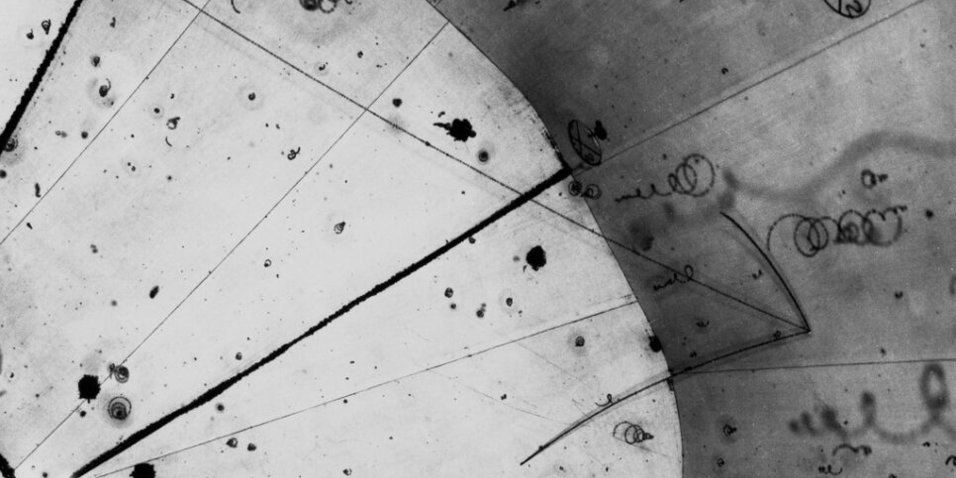
Beyond Light: New Frontiers in the Oldest Science - Part 1

Beyond Light: New Frontiers in the Oldest Science - Part 2
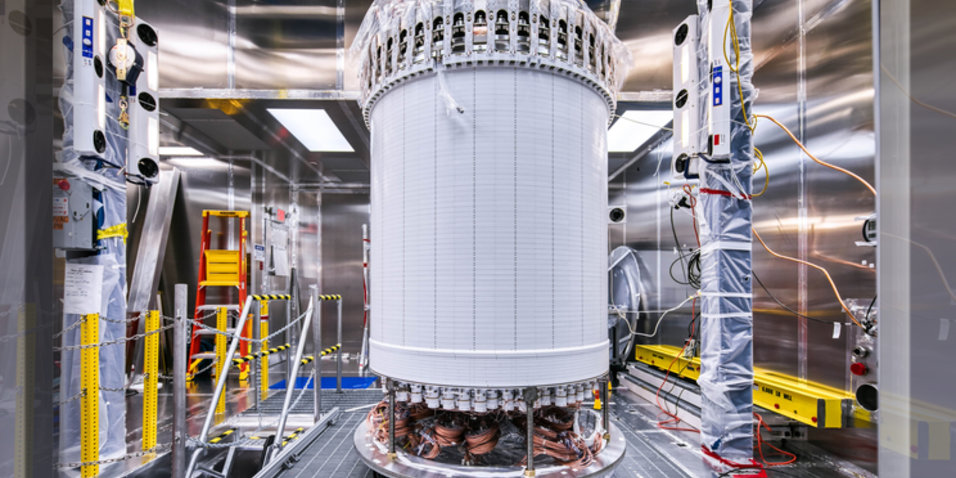
Looking for Light from the Invisible
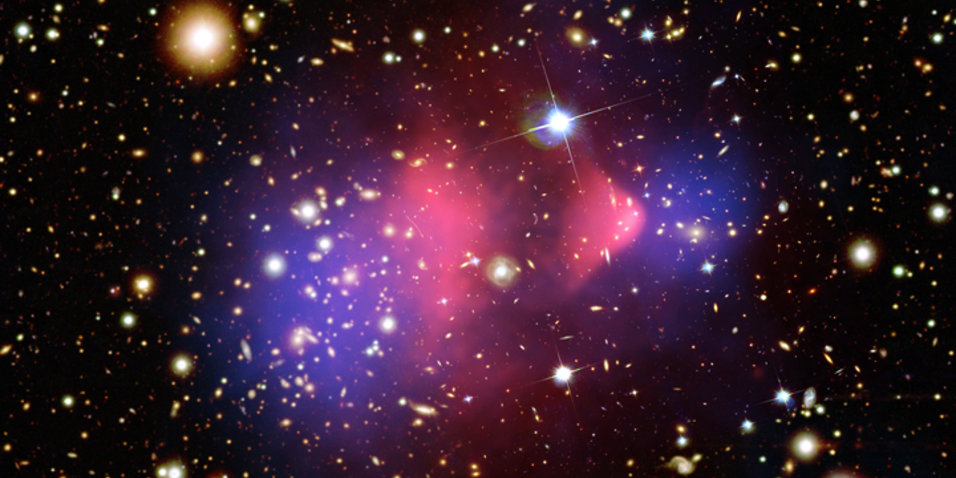
Resonating with Dark Matter with ADMX-VERA
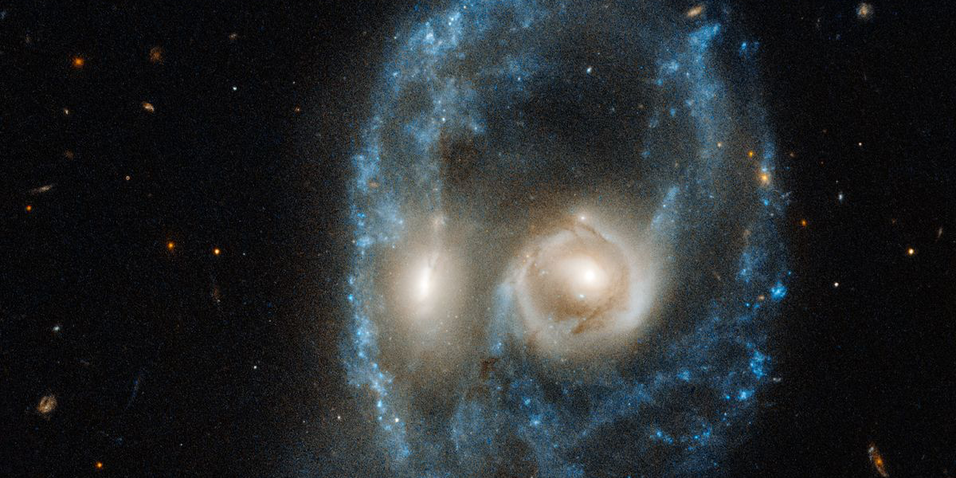
Ghosts in the Sky and Ghosts in the Machine
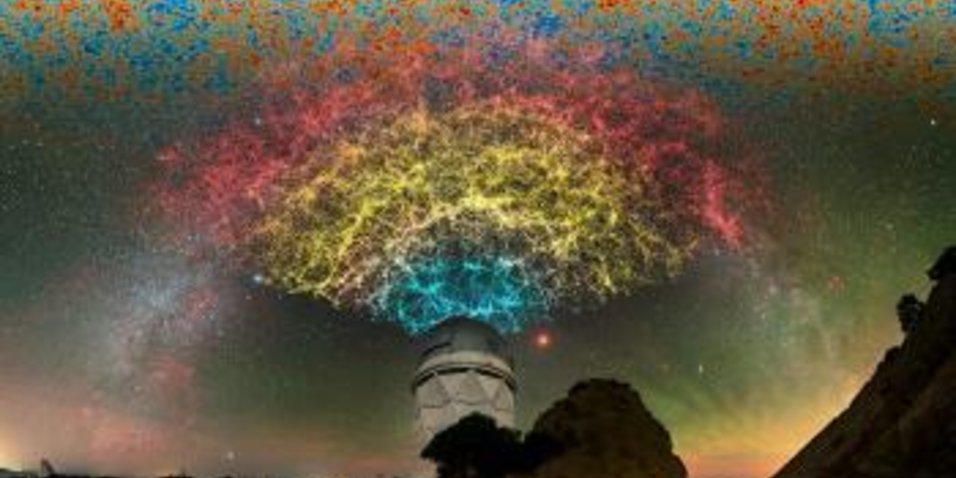
Unraveling the biggest 3D map of galaxies with DESI

Spotting the Universe’s oldest light from the Atacama Desert


Related People
-

Tom Abel
Professor of Particle Physics and Astrophysics and of Physics -

Zeeshan Ahmed
Associate Professor of Particle Physics and Astrophysics -

Daniel Akerib
Professor of Particle Physics and Astrophysics -

Steven Allen
Professor of Physics and of Particle Physics and Astrophysics -

Jay Baptista
Ph.D. Student -
Dominic Beck
Physical Science Research Scientist -

Elliott Bloom
Professor of Particle Physics and Astrophysics, Emeritus -
Alex Broughton
Rubin Ops Research Associate -

Patricia Burchat
Gabilan Professor -

Chris Byrohl
Postdoctoral Scholar -
Eric Charles
Staff Scientist -

Rebecca C. Chen
Postdoctoral Scholar -

Ani Chiti
Postdoctoral Scholar -

John Franklin Crenshaw
Postdoctoral Scholar -

Tara Dacunha
Ph.D. Student -
Ben Dodge
Ph.D. Student -

Lukas Eisert
Rubin Observatory Specialist -

Joshua Frieman
Professor of Particle Physics and Astrophysics and, by courtesy, of Physics -

Hope Fu
Ph.D. Student -

Peter Graham
Wells Family Director of the Stanford Institute for Theoretical Physics and Dr. William S. & Carol A. Davies Professor of Physics -
Sven Herrmann
Physical Science Research Scientist -

Kent Irwin
Professor of Physics, of Particle Physics and Astrophysics and of Photon Science -

Yijung Kang
Res Assoc-Rubin Observatory -
Chao-Lin Kuo
Professor of Physics and of Particle Physics and Astrophysics -

Noah Kurinsky
Senior Scientist -

Brian Lantz
Professor (Research) of Applied Physics -

Shun-Sheng Li
Postdoctoral Scholar -
Zhixuan Li
Ph.D. Student -

Adam Mantz
Physical Science Research Scientist -

Phil Marshall
Senior Scientist -
Joshua Evan Meyers
Rubin/LSST DESC Ops Scientist -

Eli Mizrachi
Postdoctoral Scholar -

Eric Moseley
Postdoctoral Scholar -

Benjamin Nachman
Associate Professor of Particle Physics and Astrophysics and, by courtesy, of Physics and of Statistics -

Kate Napier
Res Assoc-Rubin Observatory -

Oliver Philcox
Assistant Professor of Physics -

Andrés A. Plazas Malagón
Rubin Operations Scientists -

Maya Redden
Ph.D. Student -

Aaron Roodman
Professor of Particle Physics and Astrophysics


